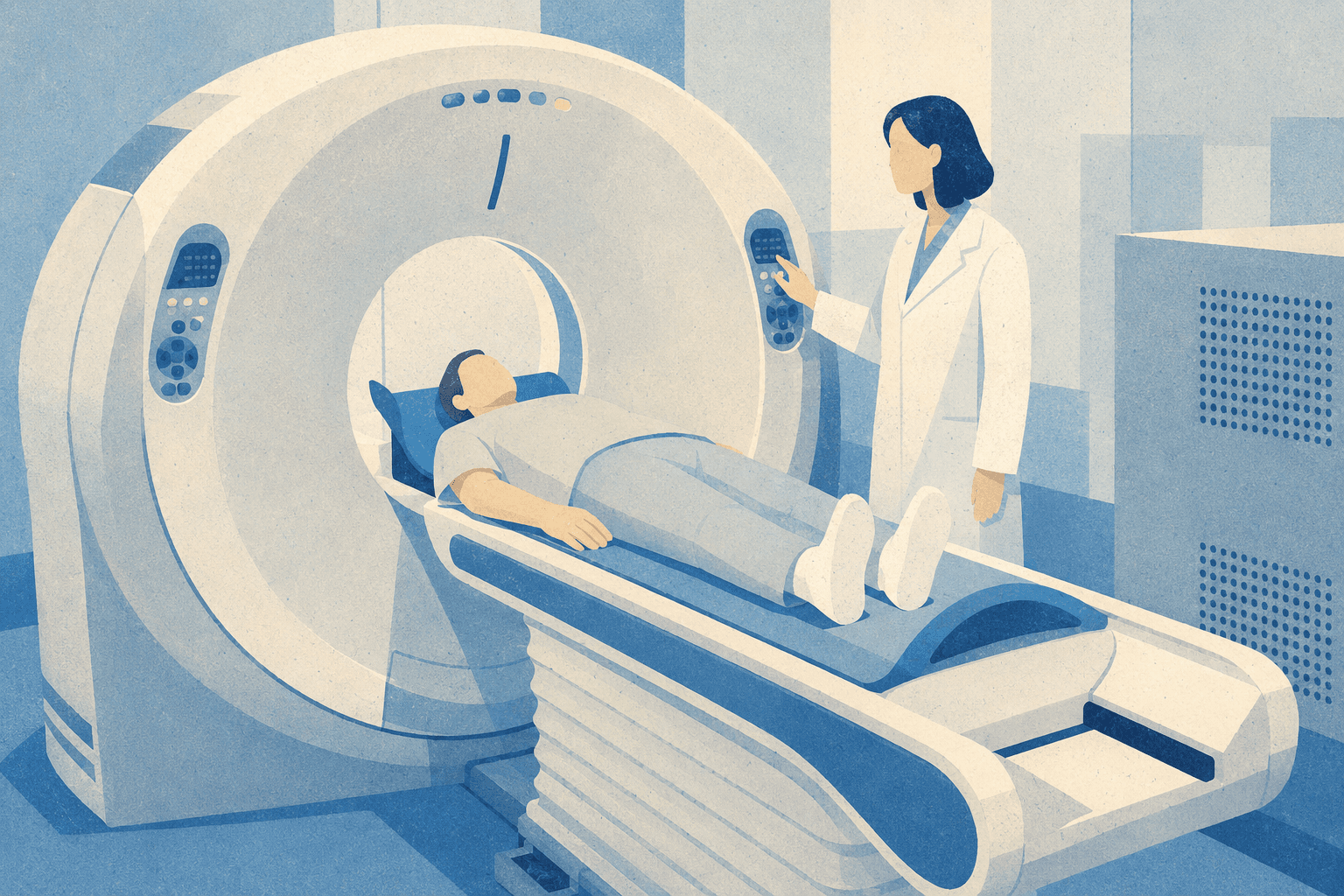
What MRI Scans of Elite Footballers Reveal Before They Ever Feel Pain
Picture this: a professional footballer walks into a pre-signing medical. He's been training twice a day, playing 90 minutes on weekends, and hasn't missed a session in months. No pain. No complaints. Physically, he feels exceptional.
Then we look at his MRI.
What we find surprises most people — and often surprises the player himself. Because elite athletes can carry significant structural changes on imaging and feel absolutely nothing. This isn't rare. It's the norm.
This is what pre-signing medicals reveal. And understanding what those findings actually mean — and which ones matter — is one of the most critical skills in elite sports medicine.
What Is a Pre-Signing Medical?
A pre-signing medical is a comprehensive health assessment carried out before a professional football club officially signs a player. At East Bengal FC, we run these assessments as a standard part of every transfer process.
But here's what most people get wrong: a pre-signing medical isn't designed to disqualify players. It's risk mapping.
The goal is to build a complete picture of where an athlete stands physically — not just right now, but over time. We want to understand what load they've been carrying, where structural changes exist, and how we can protect them from the injuries those changes might predispose them to.
Beyond MRI imaging, a thorough pre-signing assessment covers:
Clinical examination of all major joints
Movement and mobility screening
Strength assessment
Cardiovascular evaluation
Full injury history and previous scan report review
Performance and GPS data analysis
Imaging is one tool among many. Context is everything.
The 4 Key MRI Findings We See Most Often
A study examining MRI scans from pre-signing medicals of professional footballers found something striking. These were completely asymptomatic players — training normally, competing at full intensity. No pain. No symptoms. And yet:
42% Had Groin and Adductor Changes
Adductor-related pathology is the most common finding. In footballers, the adductor longus in particular bears enormous load from kicking, change of direction, and high-speed sprinting. Structural changes here don't automatically signal injury — but they flag a player who may need careful load monitoring, targeted strengthening, and groin-specific prehabilitation to stay ahead of problems.
Management approach: Progressive adductor loading programme, groin strength screening, load spike monitoring during high-volume periods.
30–40% Had Degenerative Lumbar Spine Findings
The lumbar spine takes a significant toll in professional football. Rotational forces, repeated hyperextension, and training volume all contribute. Degenerative changes in the lower back are extremely common in athletes over 23 years old. These findings rarely need surgical intervention — but they directly inform how we programme training, manage load spikes, and structure recovery weeks.
Management approach: Core stability and movement education, training load periodisation, structured recovery weeks during congested fixture periods.
34% Had Knee Cartilage Changes
Knee cartilage changes — including early chondral wear and meniscal degeneration — are another common finding. The key question is always: are these findings symptomatic? Are they progressive? And is the player's movement pattern placing additional stress on an already-compromised joint? A physiotherapy-led movement screen alongside the MRI gives us far more information than the scan alone.
Management approach: Biomechanical movement screen, quadriceps and posterior chain strengthening, step count and distance monitoring across the training week.
26% Had Hip Impingement — CAM or Pincer Morphology
Hip impingement (femoroacetabular impingement, or FAI) is particularly prevalent in elite footballers. CAM morphology — an abnormal bony prominence on the femoral head — is seen in a very high percentage of professional players. Many carry it their entire career without a single symptom. Others develop labral tears or early arthritis. Understanding the morphology, the player's movement patterns, and symptom history tells us how aggressively to manage it.
Management approach: Hip mobility and posterior chain strength programme, movement pattern correction, regular clinical review.
MRI ≠ Injury — The Clinical Interpretation Rule
This is where sports medicine gets nuanced — and where a lot of unnecessary panic happens.
When a player, a coach, or a club CEO sees words like "degenerative changes," "cartilage wear," or "impingement" on a scan report, the natural reaction is alarm. But radiology reports describe what the scan sees. They don't tell you whether that finding is causing any problem, whether it will cause a problem, or whether it needs treatment.
In elite sports medicine, we never interpret a scan in isolation. Every MRI finding gets correlated with four things:
Symptoms — Is the player in pain? When? Under what load? Or is this finding entirely silent?
Movement assessment — Does the finding alter how the player moves? Is compensation happening?
Performance data — Has output dropped? Are there asymmetries in GPS or strength data that correlate with the finding?
Clinical examination — What do provocation tests, range of motion, and palpation tell us?
A finding that scores zero across all four is a monitoring note — not a diagnosis. A finding that correlates across two or more may require intervention.
A real example (anonymised): We assessed a central midfielder ahead of signing. His MRI showed bilateral CAM morphology at both hips and early adductor tendinopathy on the right side. On paper — alarming. In practice? His clinical examination was completely clear. His movement screen was excellent. His GPS data from the previous six months showed no asymmetry. Zero pain reported.
He signed. We built a targeted hip and groin strengthening programme into his weekly schedule. He completed a full, injury-free season.
The scan didn't find an injury. It found risk. And knowing the risk allowed us to manage it before it became a problem.
What This Means for Athletes and Teams
Pre-signing medicals aren't the end of the assessment process. They're the beginning of a management strategy.
When we identify structural findings, we build a plan around three pillars:
Load Management
Understanding a player's injury history and structural profile means we can plan training load more intelligently. We know which weeks to protect, which sessions to modify, and when to prioritise recovery over volume. Load spikes — sudden increases in training intensity or match frequency — are the most common trigger for turning a silent finding into an active injury. Managing them is non-negotiable.
Targeted Strength and Mobility Work
Most structural findings respond well to the right programme. Adductor tendinopathy improves with progressive loading protocols. Hip impingement responds to mobility work and posterior chain strengthening. Lumbar spine changes are managed with core stability and movement education. None of these require surgery. They require the right intervention, consistently applied.
Monitoring Cadence
Players with flagged findings get regular reassessments built into their schedule — not to alarm them, but to stay ahead. If something changes clinically or shows up in performance data, we catch it early. The window between "risk" and "injury" is where sports medicine does its best work.
Modern sports medicine is proactive, not reactive.
Conclusion
The data from pre-signing medicals tells us something important: MRI abnormalities in elite footballers are not the exception. They are completely routine.
What separates good sports medicine from great sports medicine is knowing what to do with that information — and, just as importantly, knowing what not to do with it.
Not every finding is a problem. Not every scan result needs surgery. And not every abnormality ends a career.
But ignoring the right ones will.
The best surgery, in my experience, is the one you never need — because the right information led to the right prevention programme at the right time. That's what we build at East Bengal FC. And that's what every athlete and team deserves
Looking for Expert Sports Medicine Support for Your Team or Athlete?
Whether you're a professional club, an academy, or an individual athlete, early assessment and the right injury prevention strategy can protect performance and extend careers.